At the end of an activity, lesson, unit, or year, teachers want to know what students have learned. Traditionally, students are asked to answer questions in the form of a test or quiz to see what they have learned. As we know, these assessments often ask students to recall or recognize information, rather than show what they truly and deeply understand.
Over the past few years, I have begun asking my students to draw and write out models for the key concepts we are studying. Each unit is broken into modules (which I call Missions) and each mission has an essential question.
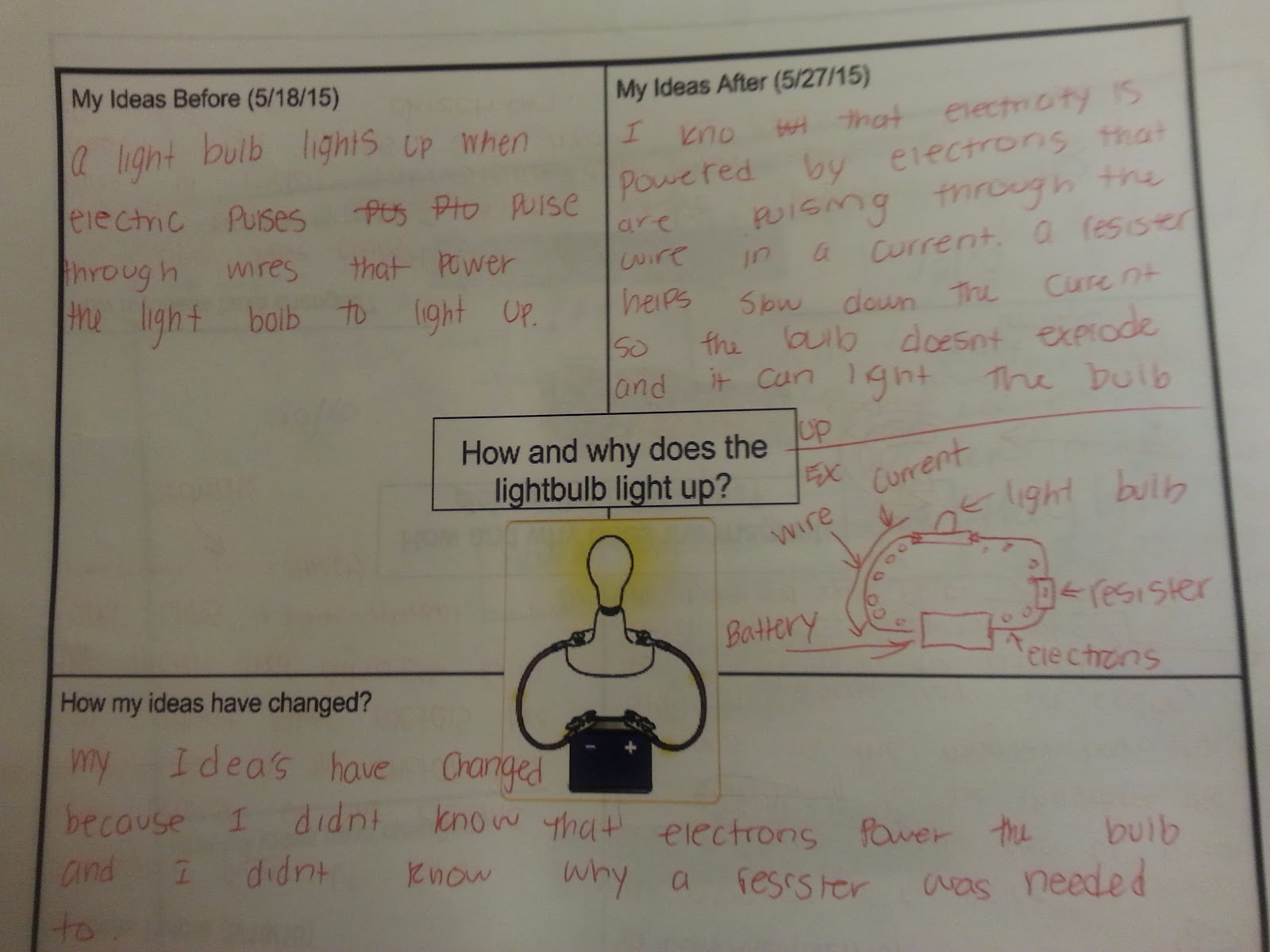
Sometimes, I have students answer this question before we begin the module, and then again after, having them reflect on how their ideas have changed over time. This allows students to see that they are learning, and allows me to see what they understand.
In the concept model to the right, you can see how much more the student understands after the module, both from how she explains and based on her self-drawn diagram.
In other modules, students complete a concept model at the end of a unit as part of an assessment. The examples below show models students completed after a unit on river systems. This line of questioning helps me know that students are doing more than just memorizing the vocabulary terms.

 After working with the model in a small group, students put what they have learned into their notes, in words and pictures.
